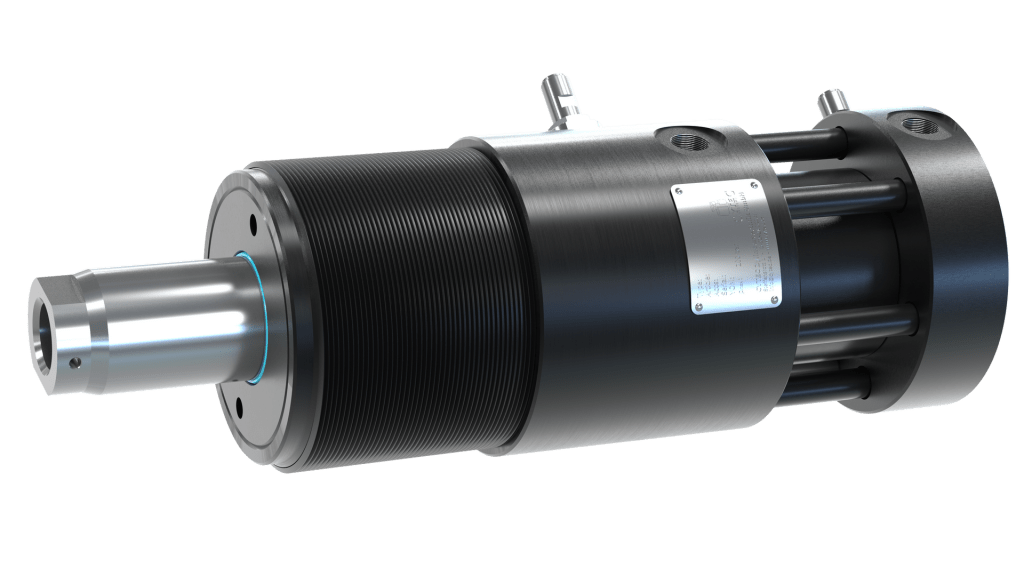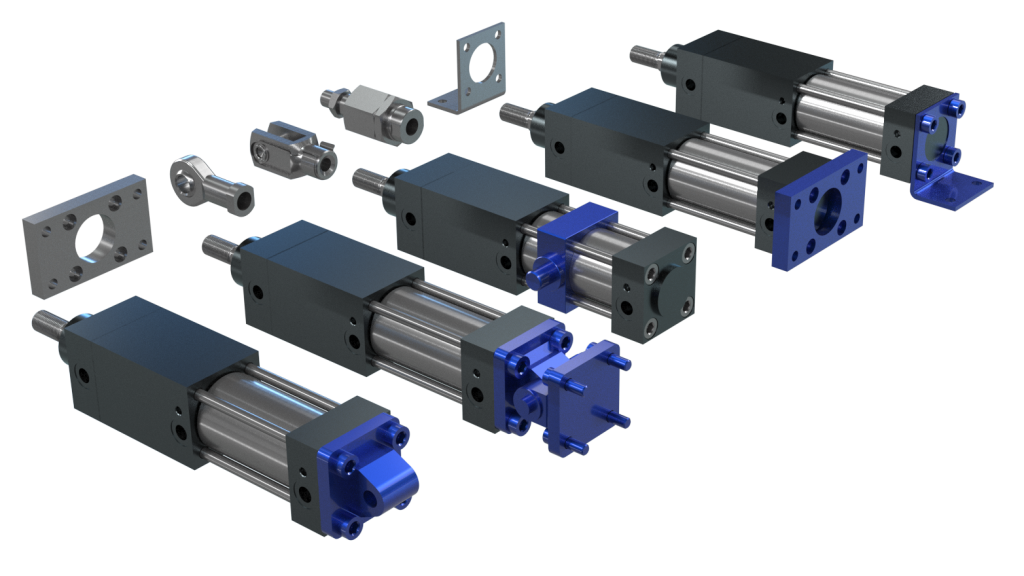

 Completely exposed core, not touching core (series CP-H..-L)
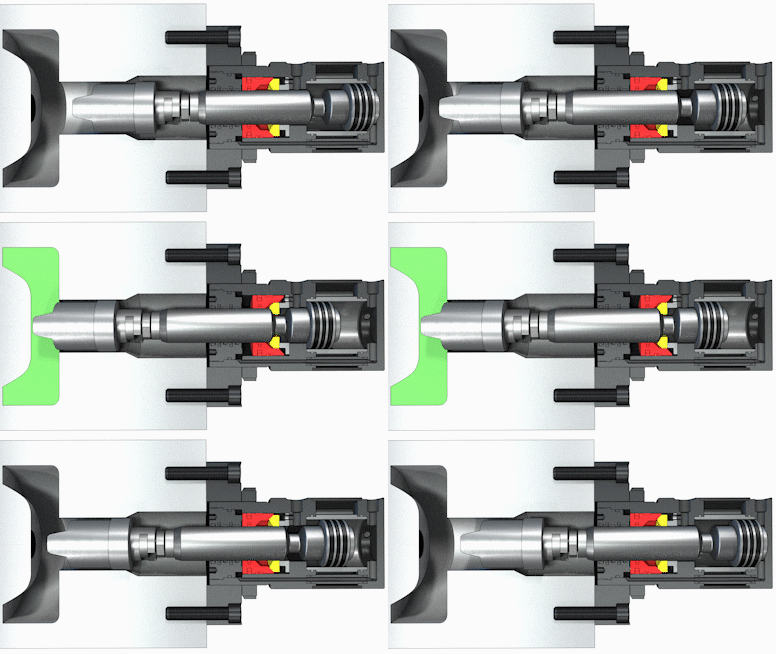
Phase 1: In the initial position the piston rod is retracted.
Phase 2: The piston rod is extended by applying hydraulic pressure on the piston side. As soon as the piston reaches the final position, the locking slide moves axially over the three-dimensional locking segments and pushes them into the annular groove of the rod . So the segments are fixed in radial and axial direction. The piston rod is clamped with positive lock. The hydraulic pressure is switched off, providing a maximum of operational safety.
Phase 3: During the injection process the core is pressurised, but it doesn’t recede in any case. The piston rod always reaches the defined final position. The hydraulic pressure is branched off with a by-pass drilling from the main supply ports for extending and retracting, enabling very fast stroke cycles.
Phase 4: The release port is pressurised, the piston rod unlocks and moves back to the initial position.